Psychological Safety Training That Actually Changes Behaviour
Psychological safety training that teams can feel, not just measure. Immersive labs and manager coaching to shift real behaviour in high-stakes conversations.
Most organisations say psychological safety matters. Many have a slide about it in the values deck. Some even run a survey and report a score. But if people still save the real conversation for the corridor, your psychological safety training isn’t working – it’s just rebranding the problem.
This piece is for teams who are done with box-ticking workshops. We look at how psychological safety training can be designed so people don’t just understand it, they actually do something different under pressure – using Sidestream’s immersive labs and follow-up manager coaching.
If you want psychological safety that people can feel in the room, not just see on a dashboard, keep reading.
What Psychological Safety Really Looks Like in Teams?
Most managers will tell you that psychological safety matters. They’ve read the articles, attended the webinar, and maybe even answered the pulse survey.
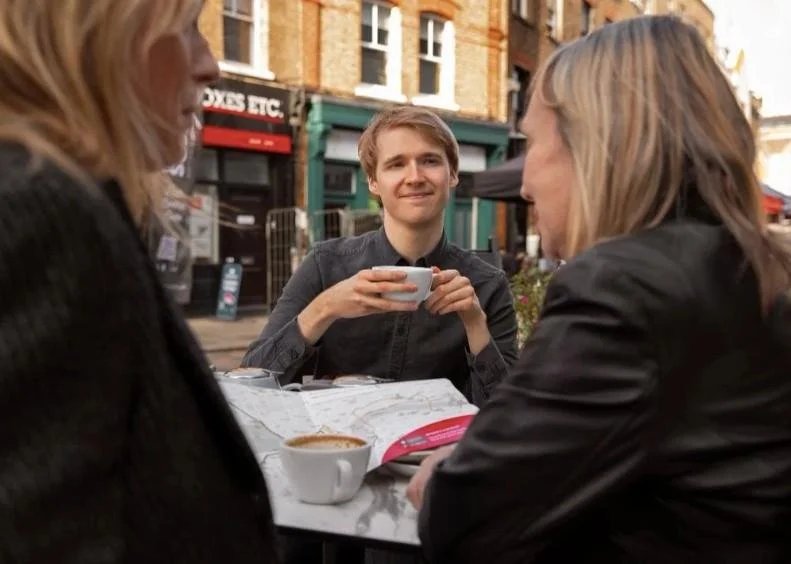
And yet… people still hesitate to speak up, feedback feels risky, and conflict quietly goes underground instead of turning into better decisions. (Courtesy photos from Freepik)
Sidestream works with teams who are already smart and capable – but who need something more practical than another talk about “being open”. Our psychological safety training focuses on what people do in high-stakes moments, not just what they say they believe.
So… Why Most Psychological Safety Training Doesn’t Stick?
The Box-Ticking Pattern
Traditional training is great at one thing: helping organisations tick the box. As Harvard Business Review has pointed out, companies spend billions on leadership and skills programmes, yet much of that investment fails to translate into better performance because people quickly revert to old habits.
People attend a half-day session
They hear some good ideas
They fill in a happy sheet
Nothing fundamental changes in how they behave under pressure.
The problem usually isn’t a lack of awareness. It’s that in real, high-stakes moments, old patterns win. We default to habits: avoiding conflict, sugar-coating feedback, shutting down when things feel unsafe.
CIPD data also shows that only a small minority of organisations rigorously evaluate behaviour change or learning transfer back into the workplace.
Why Behaviour Matters More Than Content?
Sidestream’s psychological safety training starts from a simple assumption: if you want different outcomes, you have to design different behaviours, not just better content. As CIPD and other L&D research keep pointing out, learning only really has impact when it transfers into behaviour change back in the workplace – not just in the training room.
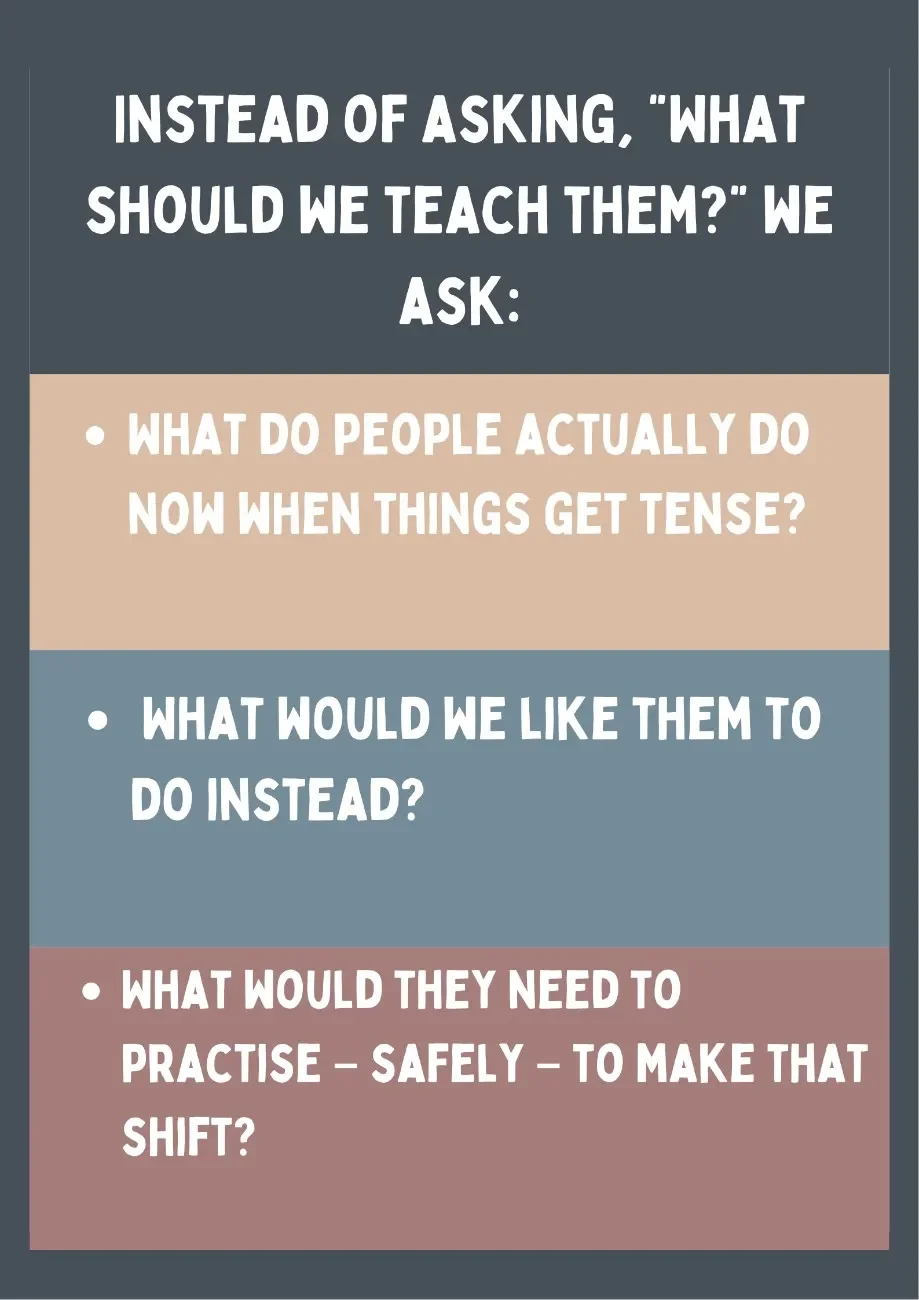
As one workplace learning report puts it, learning is doing, practising and reflecting – people have to do things, fail and try again – which is why our work sits inside immersive labs rather than standard workshops.
Inside Sidestream’s Immersive Psychological Safety Labs
Tools Managers Can Actually Use
Instead of abstract models, each immersive lab centres on a small set of psychological tools managers can use the same day:
- Rewind
Practising how to pause, “rewind” a difficult conversation, and try again with a more helpful response – without pretending everyone behaved perfectly first time.
- Reframe
Learning to shift from rigid thinking (“they’re difficult”) to flexible problem-solving (“what else might be going on here?”).
We design these tools to be:
Simple – easy to remember under pressure
Evidence-based – grounded in research on resilience, optimism and self-efficacy
Portable – they don’t stay in the room; people carry them into their next 1:1, team meeting or performance conversation
A Lab, Not a Lecture
The mood in the psychological safety lab matters. Exercises are deliberately:
Collaborative, not competitive
Slightly playful, without turning serious issues into a joke
Free from the stiff awkwardness of old-school roleplay
“Psychological safety training doesn’t have to feel like therapy under fluorescent lighting. It can be challenging, honest – and still human.”
Guardrails for Psychological Safety
Under the surface, the format borrows a lot from immersive theatre. Not in a “let’s put everyone in costume” way, but in how we design and rehearse different versions of the same story.
Participants step into:
Roles they don’t usually play at work
Viewpoints they might disagree with in real life
Scenarios that feel uncomfortably close to real conversations
We freeze the scenario, rewind it, and try again with different responses. The whole group can see – in real time – how a small tweak in wording, tone or mindset completely changes the outcome.
To keep psychological safety real (not just in the title):
No one is dragged into the spotlight – people choose how visible they want to be
Everyone stays involved – even observers are actively spotting patterns, emotions and micro-behaviours
Scenarios are custom-built to mirror your organisation’s pressure points: client work, internal politics, operational crises, performance conversations
Manager Coaching: Making Psychological Safety Training Stick
A common L&D storyline:
> Great workshop → everyone motivated → calendar fills up → life happens → nothing sticks.
Sidestream designs the after as carefully as the lab itself.

In these coaching simulations, managers:
Re-use tools like Rewind and Reframe in fresh, realistic scenarios
Practise difficult conversations that feel close to their real context – performance issues, stakeholder conflict, wellbeing concerns
Receive independent feedback on how their behaviour is changing, not just how they think they show up
“Because these follow-ups are structured, we can see trends in actual behaviour change, not just self-reported confidence. It’s the difference between “we told people about psychological safety” and “we gave people reps in using it”.”
What Changes Six Weeks After Psychological Safety Training?
Six weeks or so after the initial immersive lab plus manager coaching, the shift shows up in day-to-day behaviour, not just in sentiment.
Teams typically show:
Stronger communication under pressure
People stay clearer and less reactive in high-stakes conversations.
Better conflict-handling skills
Disagreements become a way to improve decisions, not a reason to avoid each other.
More emotional control
Managers can notice their own triggers and regulate before they escalate.
Smoother collaboration
Cross-functional work feels less like friction, more like joint problem-solving.
Higher psychological safety
People are more willing to challenge, ask for help and admit uncertainty.

Participants keep adapting the tools for themselves: to manage stress, handle disagreements, support their teams, and maintain healthier dynamics – long after the session has ended. (Courtesy photos from Freepik)
That’s the environment we design at Sidestream: not a perfect room, but a real one, where people can experiment, fail safely, rewind and try again.
If that’s the kind of change you’re looking for, psychological safety training stops being another workshop – and becomes a practical way to change how your teams behave when it matters most.
-
Psychological safety training helps teams build a culture where people can speak up, challenge ideas and admit mistakes without fear of blame. At Sidestream, it’s not a slide deck – it’s a mix of immersive labs and manager coaching that gives people safe, structured practice in high-stakes conversations.
-
Traditional training often focuses on content and awareness. Sidestream focuses on behaviour: what people actually do when things get tense. We use immersive labs, realistic scenarios and one-to-one simulations so managers can rehearse new responses under pressure, not just talk about them.
-
It’s designed for managers, team leaders and cross-functional teams who need to handle difficult conversations, conflict and high-pressure collaboration. HR and People teams also use it as part of wider culture and behaviour change programmes.
-
Yes. Sidestream runs immersive psychological safety labs and follow-up manager coaching online as well as in person. Remote sessions still use live simulations, real scenarios and active participation – not just another webinar.
-
We look beyond attendance and satisfaction scores. Impact is tracked through behaviour change in simulations and real work: how managers handle difficult conversations, how teams communicate under pressure and how willing people are to speak up and challenge.
